November 29th 2025
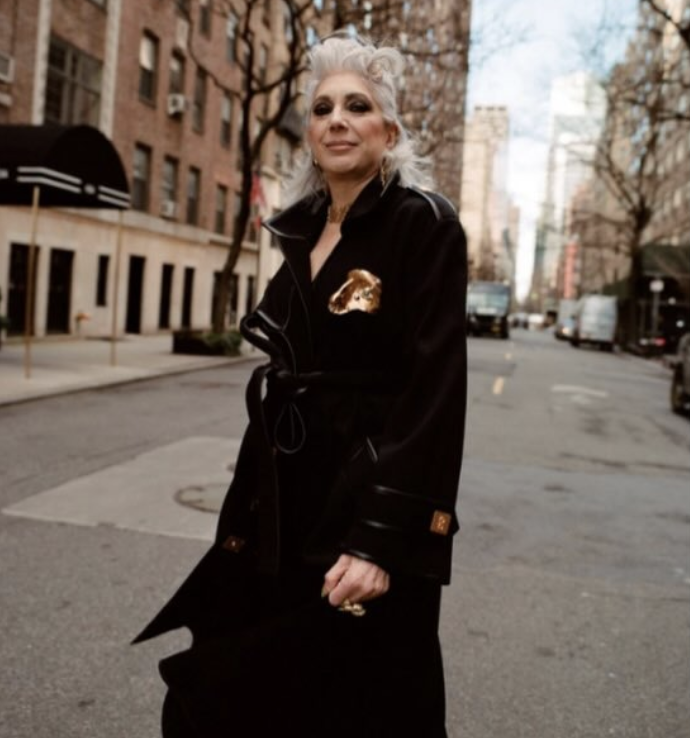
There is a verisimilitude and warmth in Lauren Ezersky’s interviews that feels extremely rare in today’s digitally mediated fashion content. Watching Behind the Velvet Ropes (1984–2012) (“Behind the Velvet Ropes,” 2025) feels less like viewing a formal interview and more like being involved in a conversation between messy, loud, TMI, stylish friends who know everything about each other and are unafraid to say it. Ezersky wasn’t just a presenter, she was a character, a brand, a narrative force. She wasn’t just talking to the biggest designers, actors, models, and artists of the time; she was talking with them as if they were at brunch, wandering through a vintage store, or grabbing food in a restaurant. The casualness humanised these celebrities. It made the viewer feel as though they were catching up with people they already knew; it almost felt relatable.
That is a dying art.
Ezersky’s style worked because her subject was never just the interview; she herself was the story, a full concept. The show was cohesive because she was cohesive. A fashion-obsessed New York girl interviewing other fashion figures in the city that birthed modern American fashion culture. It made sense. As a viewer, you understood the context: she lived in the culture she was documenting. She was part of it. The interviews didn’t feel staged or artificially structured; they felt like extensions of her real life. That authenticity is something much of today’s fashion interviewing has lost in the race for virality, format, and brand sponsorship deliverables.
Someone who recreated a similar feeling, though in a very different format, is Amelia Dimoldenberg with Chicken Shop Date. The success of her concept was immediate because it, too, relied on contrast, yet a different kind. Dimoldenberg, a socially awkward, not overly expressive, inanimated white girl from London, sat in a chicken & chip shop across from grime rappers, actors, athletes, and influencers who usually arrived with confidence, swagger, or bravado. The cultural juxtaposition was the comedy. It worked because it acknowledged a very British reality: British culture is not one thing. It is layered, classed, ethnic, contradictory, and often hilariously awkward. Watching Dimoldenberg navigate a world she both understood and was slightly out of place in made the show enticing. It was an honest cultural collision, and honestly, once again, is what made it compelling… The appeal.
However, “this authenticity” is also where some of the controversy around Dimoldenberg arises. At the beginning, her curation of guests felt rooted in a very specific slice of London and British youth, a niche urban culture. Over time, as the show gained visibility, the direction of the brand shifted sharply, the guests became more American, more mainstream, more easily marketable. It wasn’t that she wasn’t allowed to diversify, every brand has the right to evolve. The issue is that the rebrand was abrupt, not contextualised, and not narratively coherent. Audiences noticed the shift in positioning before the brand had time to explain it, which opened space for accusations of culture tourism or dilution. Changes as such being overtly visible to the average audience highlight a lack of planning in her team, that they could of discussed to slowly or gradually make this shift not so abrupt.
In Ezersky’s time, branding was more organic. A show was built around a personality, and the interview style naturally flowed from that personality. Today, branding is faster, more engineered, more reactive to analytics and sponsor pressure. Audiences are not just viewers, they are data points, measuring the “effectiveness” of content in real time, whether they consciously or subconsciously knew. This can make shifts like Dimoldenberg’s feel more transactional and less human.
This tension also appears in recent campaigns such as Burberry’s “A Pinch of Salt” advert, starring Lucky Blue Smith. His character in the campaign appears confused, slightly misplaced, yet clearly positioned to create a “moment.” That confusion is the point, but it also reflects a larger question: what is actually being communicated about British identity? Lucky Blue Smith is already a fully formed American cultural brand, a Mormon, a white male model, a visual symbol of American clean-cut beauty. He in himself was already a full concept in the public eye via his online presence. Placing him in a setting coded as “British” raises questions that are never quite answered. If a campaign blends cultures, is it meaningfully interrogating them or simply using the aesthetic of Britishness as an empty signifier?
Contrast that with Burberry’s “Auntie” character (Bus Aunty), who became instantly beloved because she was a full concept, and had her own pre-existing branding. She was specific, recognisable, and rooted in a lived British experience, the immigrant aunty archetype that exists in so many UK communities. Her character wasn’t just an aesthetic; she carried meaning, history, and emotional truth. She felt real.
This is also why Ezersky’s approach still feels fresh today. She didn’t interview people in controlled, sanitized studio environments. She filmed them while they were doing something: eating, shopping, walking, working. The context wasn’t a backdrop, it was character development. By letting viewers see fashion figures doing normal things, she allowed audiences to access their humanity. It wasn’t glamour alone that made the content engaging; it was relatability. She wasn’t talking at them. She was talking with them. And viewers felt invited into that world.
That immersive authenticity is harder to find now, not because people are talentless, but because the industry is structured around speed, optimisation, clicks, and metrics. We don’t have time for messy, meandering conversations anymore, yet those are the conversations that reveal who people really are, what we crave for… realism.
Lauren Ezersky didn’t just document fashion. She lived it alongside the people she interviewed. That intimacy is missing in much of today’s fashion media, and perhaps that’s why viewers like me are nostalgic for interviewing that feels like eavesdropping on life rather than watching a press cycle in motion.
Written by Williette Fewry.