November 29th 2025
Lebanon-a small country in the Middle East that’s situated on the eastern Mediterranean coast is one who’s unicameral parliamentary system is likely unbeknownst to the majority. El Baba in ‘Roots of Lebanon’s Sectarian Politics’ (2024) discusses how Lebanon’s parliament has been unquestionably shaped by the legacies of colonialism-from the French mandate imposed after the collapse of the Ottoman Empire in the 1920s, to the enduring influence of modern-day geopolitical pressures and U.S. sanctions.
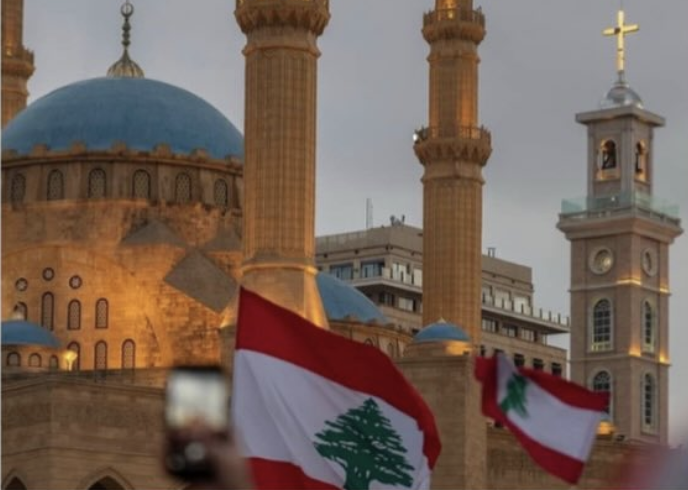
The confessional Parliamentary system is a form of governance which designates the highest governmental and decision-making positions based on religious affiliations. The positions are currently occupied and organised whereby the Speaker of the Parliament must be a Shia Muslim, the President is required to be a Maronite Christian, and the position of Prime Minister is reserved for a Sunni Muslim.
These positions form the ‘troika’ of Lebanese power which is symbolic of the three top government positions to ensure fair power-sharing amongst the country’s main sectarian communities. Furthermore, the 128 Parliamentary seats are divided proportionally amongst various religious communities.
The core question driving this article is whether a system that appears broadly inclusive of a nation’s population should be viewed as a source of strength or a potential weakness. In his article ‘Pluralism: A Key Challenge of the 21st Century’, Kofi Annan argues that the forces of globalisation have given rise to new forms of community-communities that highlight the growing importance of integration in an increasingly interconnected world.
However, here Annan frames democracy as a fragile concept that must be managed effectively to protect minorities and reach acceptable compromises. Though, in the case of Lebanon, this has not been achieved.
Irrespective of the question of merit, which advocates that positions should just be allocated to those most qualified for the role. I will be arguing the primary issue with the confessional system is the political paralysis that arises alongside institutional instability. An example is the fact the country has experienced extended periods without a President due to the instability of politicians to agree on a candidate.
However, is it fair to solely blame the Lebanese politicians without addressing how the downfall of the governmental systems was (arguably) intentionally engineered to prevent the nation from socially and politically progressing?
The French mandate, which the United States shaped indirectly via diplomacy, institutionalised sectarian quotas to prevent national unity and maintain colonial dominance.
This baked sectarian divisions into the machinery of governance thus making corruption, political gridlock and clients more likely, since a structurally sectarian system means that reform cannot occur without dismantling the system itself.
Now, US imposed sanctions against parliamentary and governmental figures, due to political corruption, are claiming to fix the very dysfunctions that their own political engineering entrenched.
The debates addressed in this article extend further than the premise that ‘Religion and politics should never mix’, because unfortunately they do.
Arend Lijphart in ‘Democracy in Plural Societies’ (1977) reframes the debate beyond the simplistic maxim that ‘religion and politics should never mix’ toward a more substantive question: how we can manage the rise of globalisation to create more effective parliamentary systems which foster inclusion, and use it to mobilise change that disregards personal interests? In the Lebanese context, the more urgent task is understanding how globalisation can be mobilised to produce more effective and inclusive institutions-one capable of transcending personal, sectarian and clientelist favours of collective political change.
Since ultimately, it is plausible to assume that another core problem lies in the very structure of political representation: when individuals occupy positions of authority primarily based on their religious affiliation, they are structurally predisposed to prioritise the interest of their sect, thereby reinforcing bias and limiting the development of a genuinely national political agenda.
Written by Farah Assi
PEaked your interest? Delve deeper into this topic below:
Moving Beyond: Interreligious Dialogue in Lebanon by Hala Fleihan : https://www.beyondintractability.org/casestudy/fleihan-moving
Pluralism: a key challenge of the 21st century: https://www.kofiannanfoundation.org/publication/pluralism-a-key-challenge-of-the-21st-century/
BIBLIOGRAPHY
Annan, K. (2013). Pluralism: a key challenge of the 21st century. [online] theelders.org. Available at: https://theelders.org/news/pluralism-key-challenge-21st-century.
El Baba, J. (2024). View of Roots of Lebanon’s Sectarian Politics. [online] Iapss.org. Available at: https://politikon.iapss.org/index.php/politikon/article/view/444/408.
Lijphart, A. (1977). Democracy in Plural Societies: A Comparative Exploration. [online] JSTOR. Yale University Press. Available at: https://www.jstor.org/stable/j.ctt1dszvhq.
GLOSSARY
Globalisation: The process of the world becoming more interconnected through increased trade, communication, and the flow of people, ideas, and capital across borders.
Democracy: System of government where people hold power
Political gridlock: Where opposing parties or branches of government cannot reach an agreement so there is little to no progression with passing laws or making important decisions.