
February 12th 2026
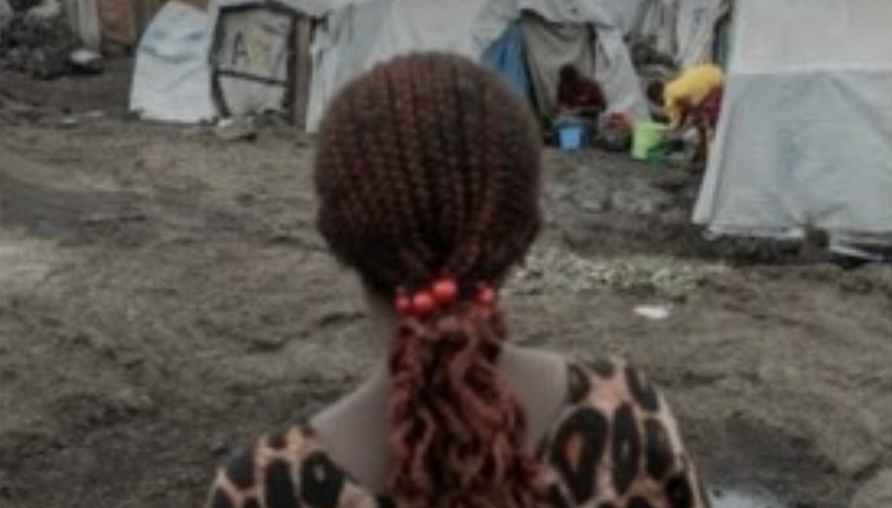
At what point is someone dignity, autonomy, self-agency and right disregarded. Answer me this, “when do you think, if fact at what point is a human being dehumanised”. There is a dystopian normalisation of suffering that is occurring in the world, for this read we will specifically be focusing on the women of Congo. The title of the read is a lyric from the song “Pearls” by Sade.
Between Resource Wealth and Bodily Violence
Women endure a severe burden in the Democratic Republic of Congo (DRC), a country whose soils sits on some the world’s richest minerals. Minerals that we need for our electric cars, laptops, phones, cobalt, coltan, gold, and tin are extracted from a region in dispute. With understanding this there is another battlefield that is exploited…
Congolese women’s bodies are used as currency in a brutal system that dates to colonial extraction and extends into modern global capitalism, whilst international corporations and military organisations profit.
Systemic Sexual Violence as Weapon and Strategy
Sexual violence in the eastern Congo is directly linked to the tactics of economic control and warfare. Rape, assault, and gender-based violence have been adopted by armed groups, militias, and governmental troops as a means of terrorising, displacing, and controlling civilian populations.
Thousands of women have been targeted by conflict related sexual assault, and systematic rape is increasingly being used as a weapon of war, according to various UN and humanitarian sources. Even though men and children have been targeted, women and young girls are disproportionately attacked.
These attacks are not accidental. Survivors have expressed being unprotected and exposed to food insecurity, armed conflict, and all of which affect women and affected and are then used by armed actors as tools of societal destruction and control.
Women as Economic Actors and Economic Victims
Millions of Congolese must enter the mines that powers global consumer markets in order to stay alive. A huge proportion of the local community work in artisanal and small-scale mining (ASM), which is known to be life threatening risky and unregulated. Even after having significant shares of these workers, women are exposed to brutal gender-based discrimination, sexual harassment, and toxic working conditions in mining operations. Women’s bodies become the stage on which these conflicts are challenged, and the resources themselves become a prize, the catalyst for continuous war.
With over 35,000 cases recorded of sexual violence against children alone in the DRC in 2025, the UNICEF has raised awareness to the systemic nature of sexual violence against both children and women.
Women’s reality is using survival tactics that endanger them, further proving gender-based violence in Congo is an inherent component of the conflict instead of a result of it.
Global Capitalism, Global Complicity
Seeing the Congo’s humanitarian crisis as just a local catastrophe isn’t enough. The cost of mineral extraction is being shifted onto local bodies and ecosystems because of Westen consumer interest in minerals, which are needed for modern electronics and green energy innovation. While international supply chains disguise human cost, armed organisations use control over mining regions finance their campaigns.
Laws that have been put in place to prevent trade in conflict minerals are not making a difference or having a significant impact. Violence surrounding mines persists, based on a 2024 U.S. GovernmentAccountability Office assessment, and conflict mineral disclosure legislations are unable to provide security or peace.
Legal disputes also arise, these being DRC government lawsuits against multinational tech companies supposedly benefiting from “blood minerals,” illustrating the close relation between resources and extraction and exploitation and massacre.
Survival Beyond Exploitation
In a geopolitical system that commodifies their bodies and their land, Congolese women have been fighting for their lives. For any sort of change, concerted political action, international accountability, and structural reformation that addresses the violence they’ve had to endure, which is embedded in global systems of trade, extraction, and repression.
This isn’t a humanitarian issue, it is political analysis of the frameworks that allow recourse assets that profit overseas, while refusing those who ought to be its primary beneficiaries the ability to govern. So, as I asked you in the beginning, answer me this “when do you think, if fact at what point is a human being dehumanised”, because the women of Congo are.
Dying to Survive.
Written By Williette Fewry
Glossary-
Democratic Republic of the Congo (DRC)
A Central African nation rich in natural resources such as cobalt, coltan, gold, and tin. Despite its wealth, the DRC has experienced prolonged conflict, political instability, and widespread human rights abuses, particularly affecting women and children.
Colonial Extraction
The process by which colonial powers forcibly removed natural resources, labour, and wealth from colonized regions for profit, often through violence and coercion. In Congo, this began under Belgian rule in the late 19th century and continues to shape economic and political structures today.
Global Capitalism
An economic system characterized by international trade, multinational corporations, and profit-driven markets that often prioritize economic growth over social welfare, environmental sustainability, and human rights.
Conflict Minerals
Minerals such as cobalt, coltan, tin, tungsten, and gold whose extraction and trade are linked to armed conflict, human rights abuses, forced labour, and environmental destruction, particularly in eastern Congo.
Armed Groups / Militias
Non-state military organizations that operate independently of formal governments. In the DRC, many armed groups finance their activities through control of mining sites and the exploitation of local populations.
Gender-Based Violence (GBV)
Violence directed at individuals based on their gender, including sexual violence, exploitation, and coercion. In conflict zones like the DRC, GBV is often used systematically as a weapon of war and social control.
References:
aid, action (2025). Sexual violence in Eastern DRC up 700% in March amid conflict. [online] ActionAid UK. Available at: https://www.actionaid.org.uk/latest-news/sexual-violence-eastern-drc-700-march-amid-conflict.
Ibanez (2025). IBAHRI and British parliamentarians publish report on sexual violence, minerals and child labour in the DRC. [online] Ibanet.org. Available at: https://www.ibanet.org/IBAHRI-and-British-parliamentarians-publish-report-on-sexual-violence-minerals-and-child-labour-in-the-DRC [Accessed 2026].
Rolley, S. (2024). UN says Congo rebels generating $300,000 monthly in seized mining area. Reuters. [online] 30 Sep. Available at: https://www.reuters.com/world/africa/un-says-congo-rebels-generating-300000-monthly-seized-mining-area-2024-09-30/.
Rustad, S.A., Østby, G. and Nordås, R. (2016). Artisanal mining, conflict, and sexual violence in Eastern DRC. The Extractive Industries and Society, 3(2), pp.475–484. doi:https://doi.org/10.1016/j.exis.2016.01.010.
UNICEF (2025). Sexual violence against children ‘entrenched’ and rising across Democratic Republic of the Congo – UNICEF. [online] Unicef.org. Available at: https://www.unicef.org/press-releases/sexual-violence-against-children-entrenched-and-rising-across-democratic-republic.