February 12th 2026
When Nigerian artist Burna Boy raps “I’ve been broke my whole life, poverty na my tradition,” or when Kendrick Lamar opens good kid, m.A.A.d city by chronicling life in Section 8 housing, they participating in a long-standing tradition within Black music: the valorisation of struggle.
This celebration of poverty, however, is not simply an aesthetic choice or a way of “keeping it real.” The glorification of poverty in rap and Afrobeats is deeply rooted in systematic historical forces, including slavery’s economic devastation, the prison-industrial complex, and evangelical narratives of Black inferiority that taught Black communities to internalise their marginalisation.
Examining these musical patterns requires understanding of how centuries of oppression made poverty appear inseparable from Black authenticity.
Slavery’s Economic Afterlife
Hartman presents that the effects of slavery effects did not end with emancipation but persist through inherited poverty and blocked wealth accumulation. Forty years after the Civil Rights Act, Black households possessed only a tenth of white Counterparts, creating what Hartman describes as a sense of living on a “Bad check” issued by the nation.
Wilkerson argues post-emancipation structural conditions kept the Black population in an unemancipated state. Practices such as sharecropping trapped formerly enslaved people on cycles of perpetual debt to white landowners, re-enslaving them through financial obligations rather than law.
Redlining further established this inequality, as Federal Housing Administration systemically denied housing loans to Black neighbourhoods, creating a significant barrier to wealth-building as homeownership is a primary source of American wealth.
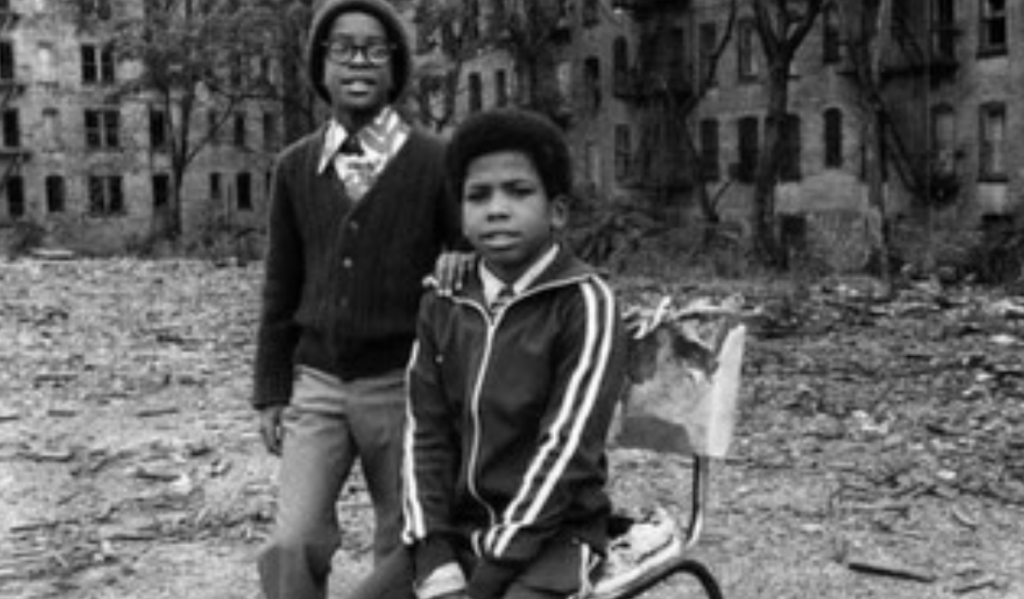
This wasn’t accidental poverty, but manufactured permanence: a caste system requiring a subordinated economic underclass. In communities where poverty became nearly universal, it transformed into an identity marker. Blackness often became associated with enduring the struggle, knowing hunger, not knowing where your next meal was coming from and surviving the streets.
This foundation positions artists, like Drake, who didn’t experience sustained poverty, as cultural outsiders who continually seek validation and credibility. His background complicates dominant expectations of authenticity, as he is usually critiqued for not being “from the struggle.” Here, poverty is redefined, operating as a credential whilst conferring legitimacy and cultural belonging.
The Prison-Industrial Complex as Modern Heir
If slavery created economic subjugation, the prison-industrial complex is its rightful heir.
Michelle Alexander’s “The New Jim Crow” argues that the War on Drugs was a primary vehicle perpetuating the industrial prison complex. Law enforcement almost exclusively targets black communities despite data showing people of all races use and sell drugs at remarkably similar rates, showing parallels to Jim Crow laws. As it was then legal to discriminate based on race, it’s now legal to discriminate against “criminals” in nearly all aspects of social life. Black Americans are incarcerated at five times the rate of their white counterparts.
This leads to a normalisation of incarceration.
Many black youths feel this is an inevitable life stage, with 60% of black men without high school diplomas imprisoned by age 34, ultimately transforming prison from aberration to an anticipated life stage.
This normalisation saturates the music.
Meek Mill opens “Dreams and Nightmares” referencing his parole officer as casually as someone might talk about their day. Lil Baby’s entire artistic narrative centres his transformation from incarcerated dealer to becoming a platinum artist. Nigerian artist Naira Marley treats police harassment as mundane daily reality.
This creates a paradox of credibility, as Imani Perry notes in her analysis of hip-hop’s prophetic tradition: prison time becomes valorised in music as proof of authenticity while artists simultaneously critique incarceration, simultaneously treating”doing time” as a badge of honour that validates their street credentials.
Evangelical Narratives and Spiritualised Suffering
The third historical force is the religious framework that made Black poverty seem divinely ordained. Sylvia Wynter’s work demonstrates how colonialism required constructing Africans as “primitive” and inferior, making their poverty seem natural rather than imposed.
This justifies both slavery and colonisation as a civilising mission. This wasn’t done due to prejudice but as an exploitative epistemological system portraying poverty as a benevolent sacrifice for a greater gift once in heaven.
Christianity became a ubiquitous weapon enforcing submission to this worldview. Missionaries taught evangelical narratives that suffering was spiritually purifying, poverty was preparation for heavenly reward, and submission to oppression was God’s will, transforming brutal exploitation into
divine testing.
These narratives echo in contemporary music through struggle theology, which highlights the tension between prosperity gospel (the wealth God wants you to have) and struggle valorisation. Both religious frameworks appear in rap and Afrobeats, portraying poverty sometimes as something to overcome and other times as spiritually necessary.
Contemporary Convergence and Resistance
These three forces (slavery’s economic devastation, the industrial prison complex, and evangelical narratives) intersect in contemporary music, creating a framework where poverty equals authenticity and struggle validates voices. A key reason for this validation is pressure from a white-owned music industry looking to commercialise and create pressure on artists to give them gritty and authentic sounds from streets rather than deviating to other themes.
But this theme isn’t just bound to the West and can be found in the Global South, as Nigerian artists and American rappers both valorise struggle because both navigate societies structured to keep Black people poor.
Yet, resistance exists within these same genres, . J. Cole interrogates materialism and the costs of success. Chance the Rapper built a career emphasising joy and gratitude over hardship. Rapsody focuses on intellectual and spiritual wealth. Some Afrobeats artists increasingly celebrate abundance rather than dwelling on deprivation. These artists demonstrate that the genres contain multitudes and that evolution toward more diverse Black narratives is already underway.
Conclusion
The glorification of poverty in rap and Afrobeats reflects communities processing intergenerational trauma and creating dignity under oppressive conditions. As Imani Perry argues, these artists function as cultural prophets bearing witness to collective suffering. Recognising these patterns requires understanding, not judgement, of the centuries of oppression that made poverty inseparable from Black authenticity.
Changing the music requires changing material conditions through criminal justice reform, wealth redistribution, and genuine educational investment. We cannot ask artists to alter content while leaving systems intact. Hope lies in artists already expanding Black narratives, audiences embracing complexity, and conversations interrogating struggle rather than uncritically celebrating it. Evolution is underway.
Written by Tola Ajayi
Reference list
Alexander, M. and Cornel West (2012). The New Jim Crow / Mass Incarceration in the Age
of Colorblindness. New York: New Press, The.
Hartman, S. (2007). Lose Your Mother: A Journey Along the Atlantic Slave Route. New
York: Farrar, Straus And Giroux.
Perry, I. (2005). Prophets of the hood : politics and poetics in hip hop. Durham, N.C.: Duke
University Press.
Wilkerson, I. (2020). Caste. [S.I.]: Random House Publishing Group.
Wynter, S. (2003). Unsettling the Coloniality of Being/Power/Truth/Freedom: Towards the
Human, After Man, Its Overrepresentation–An Argument. CR: The New Centennial Review,
3(3), pp.257–337. doi:https://doi.org/10.1353/ncr.2004.0015