February 11th 2026
“What is earth without art? Just a rock.” I find this quote to be true. Art is what connects us, could be a painting, a dance or even a song. They’re all ways for us to express aspects of our being. This is essentially what I will be exploring throughout this article.
Why do we create art in the first place?
The earliest known artworks are prehistoric cave paintings, created tens of thousands of years ago though a rigorous process which involved creating pigment from materials like charcoal and ochre which were then mixed and crushed using a quartzite stone.
The images created using the pigment often depict hunting scenes and the animals that early humans encountered. What fascinates me most, however, are the handprints found on these cave walls.
Unlike narrative scenes that hint at larger events, these simple imprints seem to exist for one purpose: to declare I was here – a quiet yet powerful affirmation of human existence.
As a species we highly value art, it’s a way to express the inexpressible.
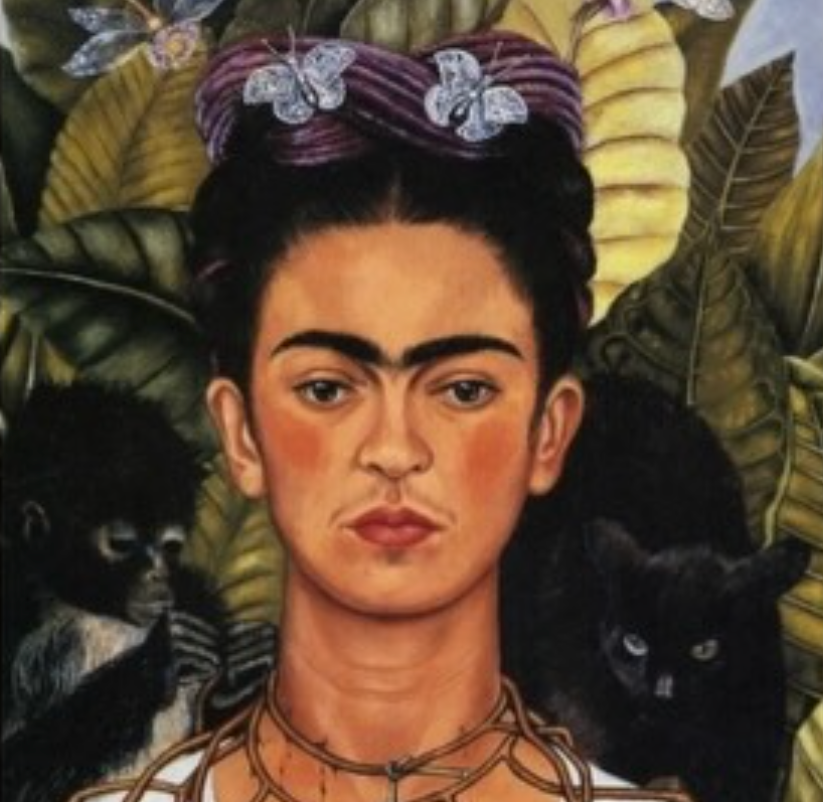
Take Frida Kahlo’s “Self-Portrait with Thorn Necklace and Hummingbird” as a great example of how a painter uses art to tell stories of their joy and suffering. At the age of 18 she was part of a road accident, which lead to multiple broken ribs, spinal column, collarbone and 11 fractures in her right leg. This was only one incident yet it resulted in a lifetime of medical support.
Art then became Kahlo’s most powerful coping mechanism, a means of translating the profound traumas of her life into visual form. What might appear to an uninformed eye as merely a striking arrangement of colour and composition is, in truth, a carefully layered testament to her pain: transformed, digested and ultimately made endurable through creation.
“The most powerful art is to make pain a healing talisman.”
Although Frida Kahlo is now revered as one of the most influential artists of the 20th century, the magnitude of her fame was realised only after her death. Today, she endured not only through her vivid, unflinching self-portraits but also through her candid exploration of female identity and sexuality- an honesty that has empowered generations of women.
Her legacy speaks to something profoundly human: our desire for permanence in a world that is constantly shifting beneath our feet. We yearn to leave behind a trace of ourselves- whether a signature, a symbol, a story, which confirms our presence.
Written by Maria Yuosf
Edited by Farah Assi
References –
Hayden Herrera (1983) A Biography of Frida Kahlo. Harper & Row.
K. Kris Hirst (2025) Ancient Pigments -Our Colourful Past. Available at: https://www.thoughtco.com/ancient-pigments-our-colorful-past-169888