February 11th 2026
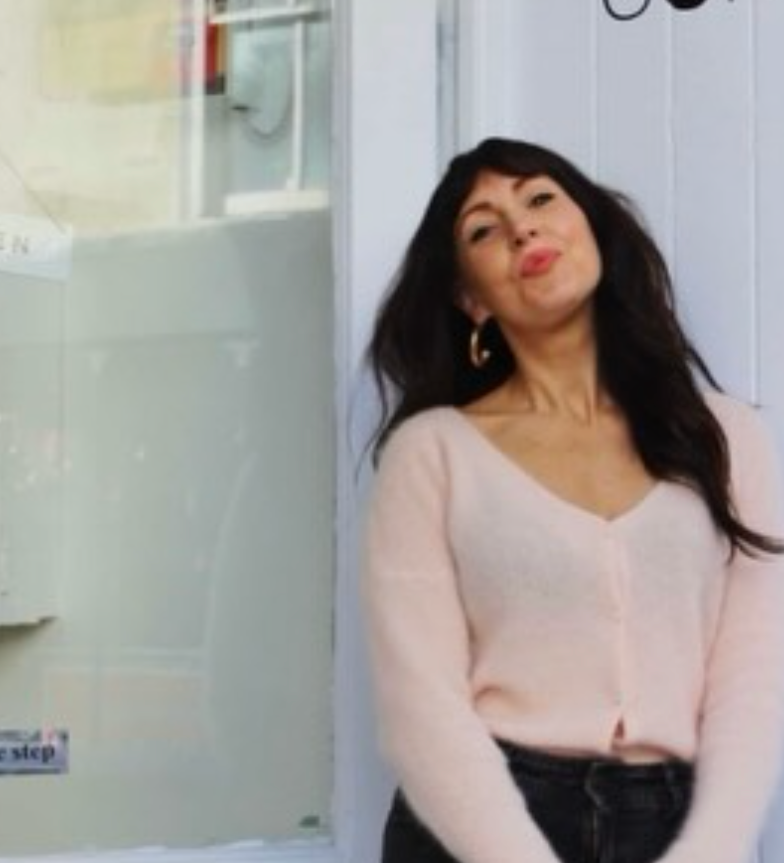
To write this article I interviewed the owner of COR gallery- Emily Dymond whose artistic journey was manifested from the early years of accompanying her mother to numerous exhibitions.
The seed was planted for opening her own gallery when she often visualised or some may say ‘manifested’ having a space of her own during her experiences living abroad in India and engaging in spiritual practices.
Opening a gallery in Falmouth naturally aligns with the artistic demographic of the area. However, even in a hub where creativity and individuality are celebrated, it remains important to address the polarising nature of the arts -particularly within education.
The issue of ‘Defund culture’ lies exactly with the premise of ‘subjectivity’, the very quality upon which art is built. The Adam Smith Institute (a right-wing think tank), which typically advises and influences Conservative Government policy, argues that ‘the multipolicy of taste out there means that we cannot justify any spending on such endeavours that are only enjoyed by the few’. Osborne’s 2010 Prime Ministerial term was the beginning of a series of austerity cuts aimed at the arts- a sphere that encompasses museums, local theatres, orchestras, arts centres and libraries.
Jo Grady -the general secretary of the University and College Union responded to Sunak’s government’s decision (in April of 2024) to cut funding to creative arts courses by noting how ‘Arts subjects are increasingly becoming the preserve of the rich which will further shut down opportunities for working class students.
This concerningly reinforces the narrative that the bourgeoisie have weaponised the arts.
Gary Hall, in his paper published by Coventry University, alludes to how ‘defund culture’ – a provocation aimed at exposing how elite institutions gatekeep what counts as culturally valuable, exemplifies how questions of value in the arts remain deeply political. Rather than being neutral guardians of culture, these institutions often reinforce classed ideas of what is ‘worth’ preserving or funding.
This raised the question of how we measure value. Is art becoming a language spoken only by elites?
In ‘The value of Everything’ (2018) Mariana Mazzucato argues that value extraction is often rewarded ‘more highly than the value creation productive process which drives a healthy economy and society’ claiming that ‘it is far too easy for those operating in market economy to get rich by extracting value from those who actually create it, not by adding it themselves’ .
This echoed the narrative that art has become exclusionary, leaving only room for buyers, not creatives.
I was therefore keen to discuss with Emily how she balances the subjectivity of art with business interests-deciding which pieces are ‘valuable’ enough to display in the gallery whilst simultaneously ensuring they brought in profit, a factor ultimately necessary to keep the business alive.
For her, despite living in a growing capitalist society, the roots of the name ‘COR’ gallery, serve as a constant reminder to put passion over profit.
She is committed to sharing only work- her own and others- which feel personal, emotive and meaningful, hoping that others will resonate with it. Here, the threat of commercialisation is being defeated by retaining a strong sense of individuality.
However, in a world whereby business become consumed by profit-motives, Emily convincingly notes how it isn’t always possible to leave financial considerations out of art.
The power of human action becomes evident when our desire to have things no one else has, turns intentionally anarchic artwork – created with the intention of critiquing the state, capitalism or institutions- into status symbols of the very systems they oppose.
An example is the anonymous artist Banksy, whose graphic street art that would appear in politically significant locations (such as outside the Royal Court of Justice) emerged as an archaic form of political dissent: opposing government policies, speak out against global injustice and critiquing capitalism. Yet his pieces have now become capitalist commodities themselves.
This irony highlights how human action can subvert original meaning: our desire for exclusivity transforms work meant to resist power, into luxury items that reinforce and feed into the very systems they sought to challenge.
This raises the question of whether traditional conservative thinkers such as Hobbes overstated the selfishness of human nature, or whether they were closer to the truth than we would like to admit.
Are humans intrinsically egoistical? Is it our own fault that intrinsic greed has led us to view everything as a commodity to be acquired, driving over-consumption and unsustainability? Or, have the perceived threats to the artistic sphere been overembellished?
Yet, Emily also remarks how the trends in art inclusivity, with more institutions, galleries and the market showcasing work from artists with various backgrounds, alongside many spaces also offering free access to cultural hubs, means that there is actually no price tag on exploring creativity.
‘‘If you were to put a bunch of people in a room with art and take away the price tags -everyone in that moment is equal’ -Emily Dymond
Written by Farah Assi
PEaked your interest? Delve deeper into this topic below:
Editorial (2026). The Guardian view on the class crisis in the arts: the UK’s culture must not become the preserve of the elite. [online] the Guardian. Available at: https://www.theguardian.com/commentisfree/2026/jan/30/the-guardian-view-on-the-class-crisis-in-the-arts-the-uks-culture-must-not-become-the-preserve-of-the-elite.
Hall, G. (2022). Defund culture. Radical Philosophy, [online] (212), pp.62–68. Available at: https://www.radicalphilosophy.com/commentary/defund-culture.
jonathan-pradillon (2024). Accessibility of art. [online] ArtInsolite. Available at: https://www.artinsolite.com/en/post/accessibility-of-art?srsltid=AfmBOorHqZAFIOeYIXBO3tty84KlO9dQItMPWv0thfYw1ZaUs-4DFWdV [Accessed 9 Feb. 2026].
Mazzucato, M. (2018). The value of everything: making and taking in the global economy. S.L.: Public Affairs.
Monbiot, G. (2015). We’re not as selfish as we think we are. Here’s the proof | George Monbiot. The Guardian. [online] 14 Oct. Available at: https://www.theguardian.com/commentisfree/2015/oct/14/selfish-proof-ego-humans-inherently-good.
Smith, A. (2015). Adam Smith Institute. [online] Adam Smith Institute. Available at: https://www.adamsmith.org/blog/media-culture/yes-first-thing-lets-defund-all-the-artists [Accessed 9 Feb. 2026].
Union , U.C. (2024). Government assault on arts turning higher education into ‘arid desert’. [online] Ucu.org.uk. Available at: https://www.ucu.org.uk/article/13530/Government-assault-on-arts-turning-higher-education-into-arid-desert.