July 19th 2026
The question of young people’s participation in politics is as old as time, as with a new generation often comes new thought. Karl Marx wrote The Communist Manifesto at 29; Mary Shelley’s feminist thought and individual freedom ideals are in her writing at 18, and many generations of young people have been defined by their political activism like movements such as the anti-war protests of the 60s.
Growing up, my exposure to politics came with strike action, climate change and Brexit, amongst more. It was based on the socioeconomic environment of London at the time and on our democratic system of government.
The concept of democracy dates back to the Ancient Greeks and, when broken down, translates to ‘by the people, for the people’. Here, participation in politics was framed as the tool for all solutions which had the capability to fix unfair systems.
Though not all people could always be included. Yet, how can we have true democracy when a large chunk of the population does not, or feels discouraged to, participate?
This is coined as political disengagement or political apathy, where interest or engagement in the political process among citizens is lacking, something critical when assessing the success of a democracy (Purdy, 2024). In a House of Commons briefing, people are described as politically disengaged ‘if they do not know, value or participate in the democratic process’ (Uberoi and Johnston, 2022).
So, where do young people stand now?
Indeed, 18-25-year-olds are most dissatisfied with how democracy works in the UK (Uberoi and Johnston, 2022), with reports of ‘young people less likely to register to vote, to vote and be elected’ (Tonge and Mycock, 2012). This suggests not only a lack of participation but that the reason is a disapproval of the process.
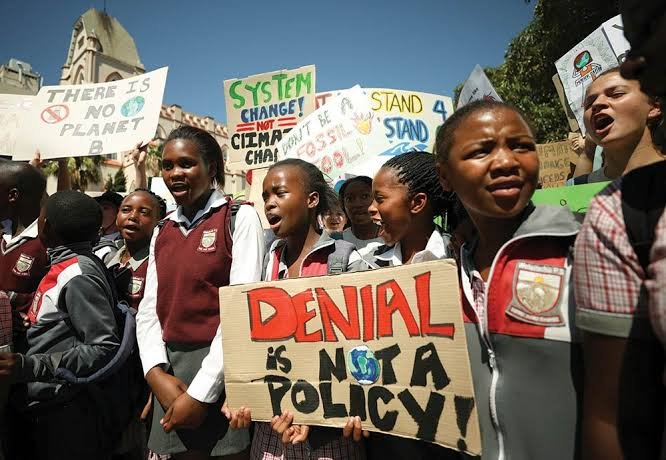
However, I see that political activity and the desire for political action amongst young people are not absent. It shows itself in other ways: protest, advocacy and harnessing the power of social media. A study carried out by the British Election Survey revealed that 18-25-year-olds were actually the least likely to be disengaged, after assessing political activity over 7 days. I think the answer to this dissonance is that the youth participate in ‘other forms of political life’ (Pontes et al, 2017).
Does this aversion to the traditional process threaten democracy?
I think that there is real strength in political activism and protest, but this is only one side of the coin. Given that the voting system is what brings in, keeps and protects the authority of politicians, the voting process needs to be made to feel impactful and useful to the younger generations, to encourage participation.
It would be worthy to question whether a bridge between young people and government needs to be formed in order to rebuild trust and confidence in the voting system. Young people may not engage in and value the traditional process, but they are not ignorant to the political issues of the day (Uberoi and Johnston, 2022).
Voting is the most direct use of our democratic power, and those who protested in the past, in order to gain this right, demonstrate this. A lack in those just registering to vote proves the most disheartening, showing a lack of attempt at all. The number of young people registered to vote in 2022 was nearly 30% less than those aged 55 and above (The Electoral Commission, 2022). Not only do we need an active young generation voting, but participating in the elections themselves. And only trust and participation in the traditional process will encourage this. It is what legitimises our government and our democracy, and forms part of our democratic duty.
Has social media worsened this apathy?
Social media (especially amongst young people) has become an easily accessible tool for political action.
However, its intense exposure to young people so early has meant that they are growing up with an overwhelming amount of information, getting a front row seat to every political stage and scene.
Not only does this pose a risk in terms of mental health and what certain content teaches them, when considering political apathy, the incessant and constant discourse, news, back-and-forth and exposure to atrocities can have a harmful effect as the oversaturation of negativity debilitates any sense of hope or encouragement.
Simply, young people may feel overwhelmed, paralysed or distrustful: apathetic.
Perhaps young people are not feeling this due to a lack of knowledge and participation, but exactly because their knowledge and participation lead seemingly nowhere or have little impact. Thus, affecting their trust in traditional politicians and politics.
Concluding thoughts
I believe that young people are exposed to political discourse more prematurely and in a fashion that is so out of control like that of social media. The bombardment of negative information that is so easily accessible has reduced the optimism young people have for a better political climate.
Though this does not mean young people are not motivated to participate.
The awareness of young people has given them the confidence and means to fight for what they believe in. Young people understand better than anyone the political environment of today, and this generation has different obstacles to tackle in their political journey.
The spirit of the youth in politics, generationally present, is unmoved in my opinion, but there is a need for young people to direct this towards their voting power.
Politics and participation thrive in environments where there is the ability to express a range of opinions and where political participation leads to action and outcomes.
Written by Keara-Valentine (KV) O’Brien
Bibliography: Harvard
Purdy, ER. (2024) Political Apathy. Available at: https://www.ebsco.com/research-starters/social-sciences-and-humanities/political-apathy#full-article (Accessed: 25 January 2026).
Uberoi, E. and Johnston, N. (2022). Political disengagement in the UK: Who is disengaged? [online] Parliament.uk. Available at: https://researchbriefings.files.parliament.uk/documents/CBP-7501/CBP-7501.pdf. https://commonslibrary.parliament.uk/research-briefings/cbp-7501/
Andrew Mycock and Jonathan Tonge, ‘The party politics of youth citizenship and democratic engagement’, Parliamentary Affairs, 2012, 65:1, p. 144
Ana Isabel Pontes, Matt Henn and Mark D Griffiths, ‘Youth political (dis)engagement and the need for citizenship education’, in Education, Citizenship and Social Justice, 2017, 14:1, 3-21
See Matt Henn and Nick Foard, ‘Young people, political participation and trust in Britain’, Parliamentary Affairs, 2021, 65:1, 47-67
Electoralcommission.org.uk. (2025). Explore the data: Who is and isn’t registered to vote? [online] Available at: https://www.electoralcommission.org.uk/research-reports-and-data/electoral-registration-research/explore-data-who-and-isnt-registered-vote [Accessed 8 July 2026].